 Money in One Chart
meta
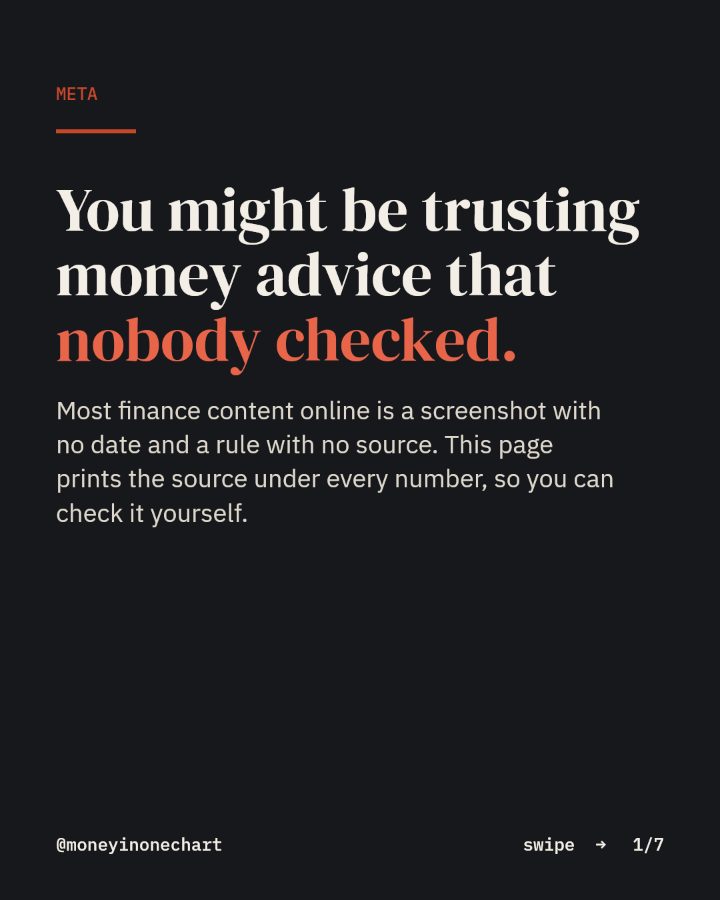
You might be trusting money advice that nobody checked.
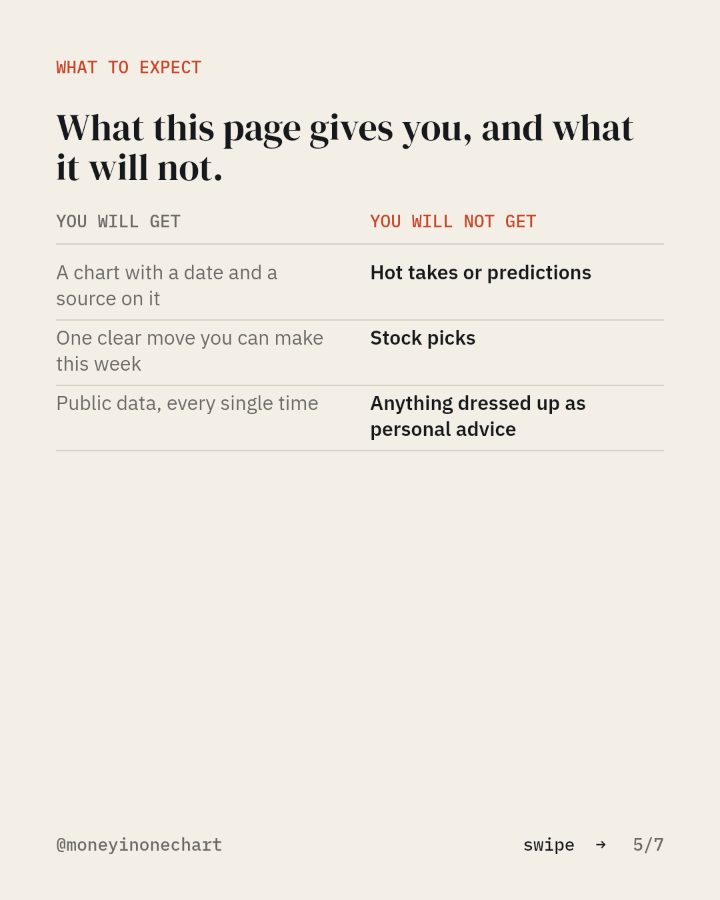
Most finance content online is a screenshot with no date and a rule with no source. This page prints the source under every number, so you can check it yourself.
You asked for the list of sources this page uses. It is below, as the slides from the post, then the one move, then the tool the chart points at.
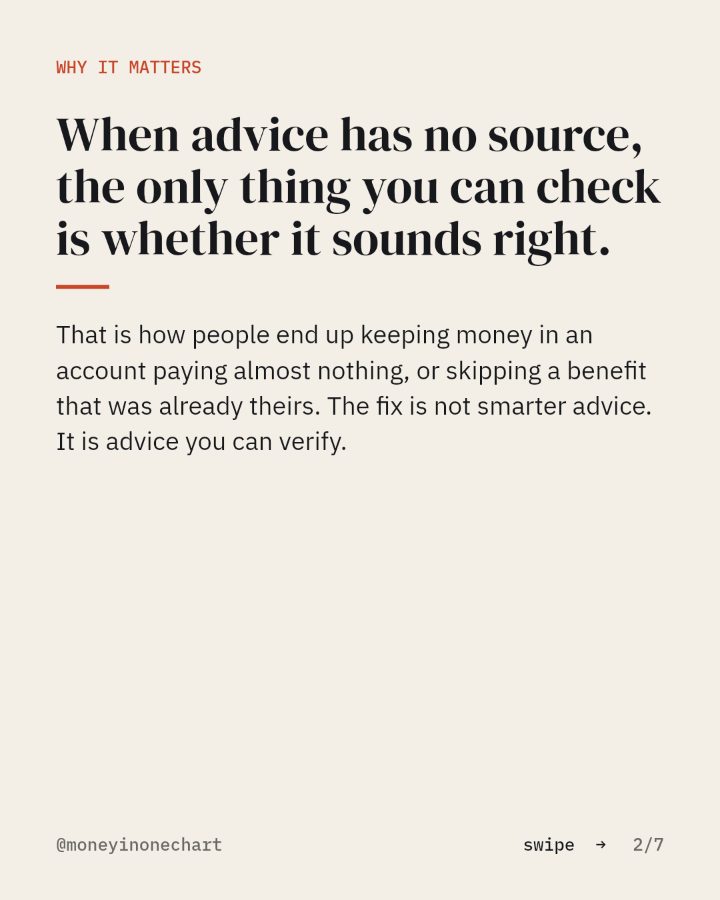
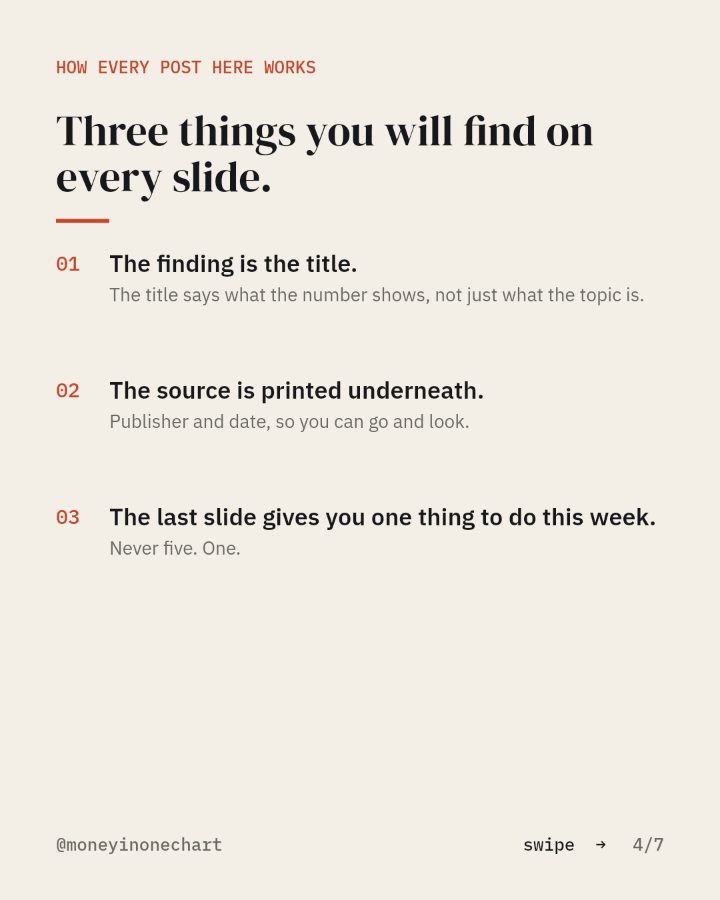
Three things you will find on every slide.
- 01The finding is the title.The title says what the number shows, not just what the topic is.
- 02The source is printed underneath.Publisher and date, so you can go and look.
- 03The last slide gives you one thing to do this week.Never five. One.
The tool this chart points at
A high-yield savings account
FDIC-insured, no monthly fee, no minimum balance. Where the emergency fund lives.
Open itThis link may pay Money in One Chart a referral fee if you open an account. Your price does not change. How that works.
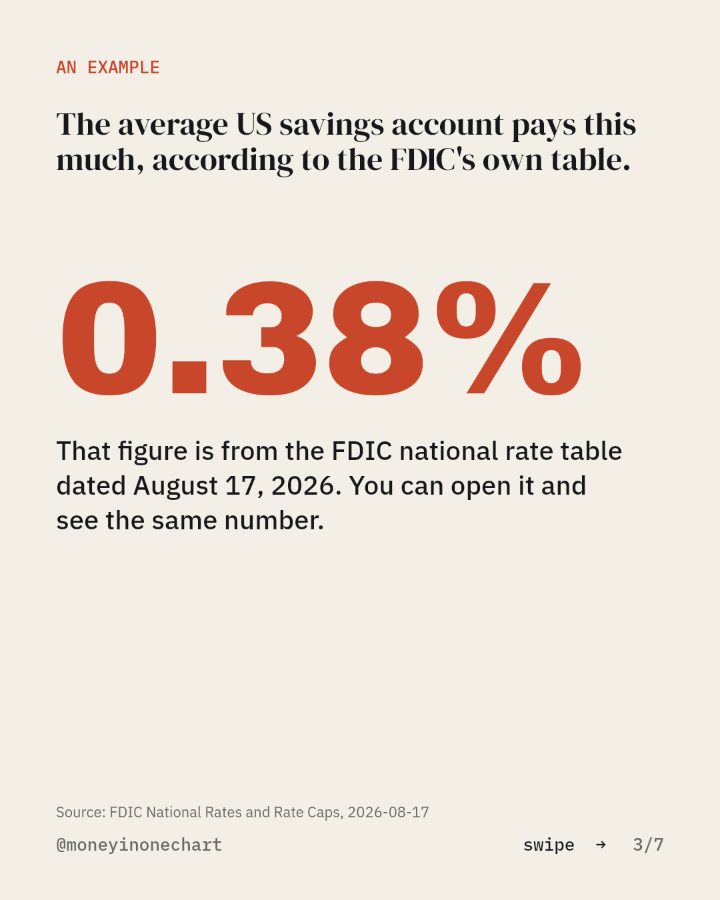
Sources: FDIC National Rates and Rate Caps, 2026-08-17.