 Money in One Chart
where money goes
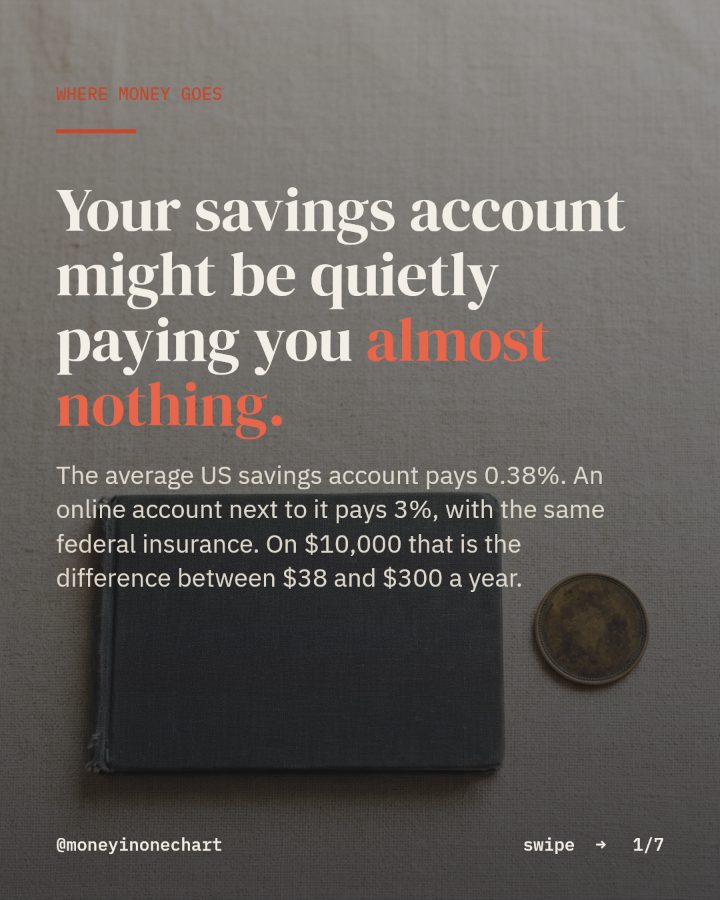
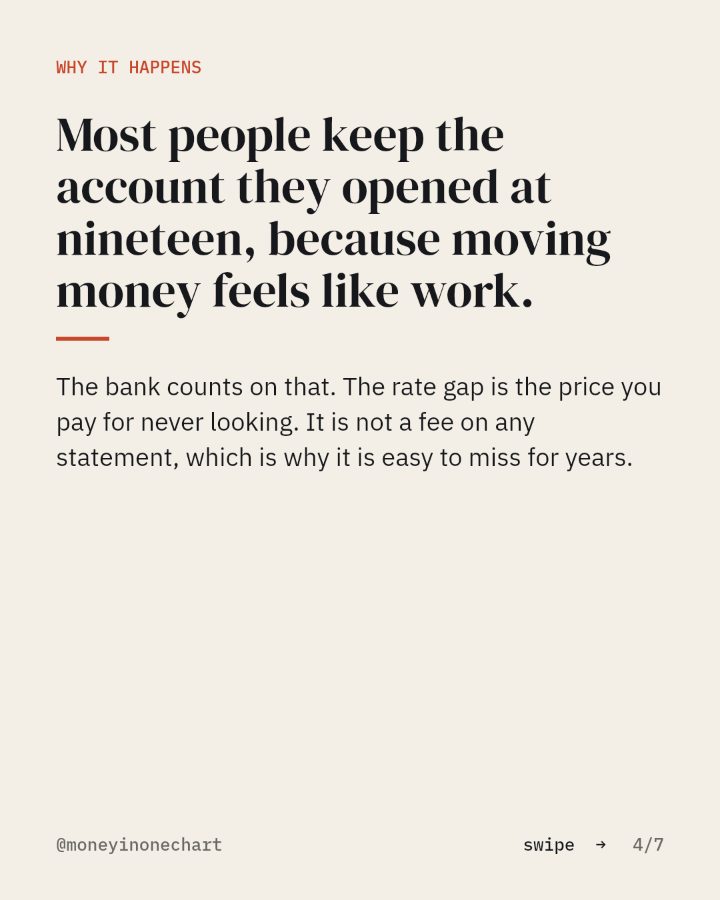
Your savings account might be quietly paying you almost nothing.
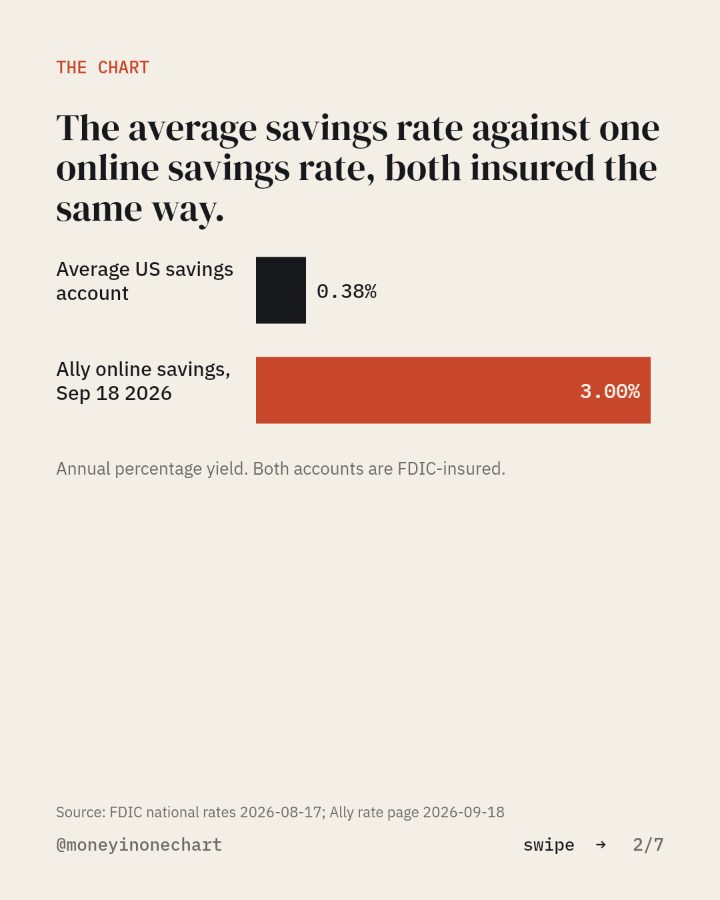
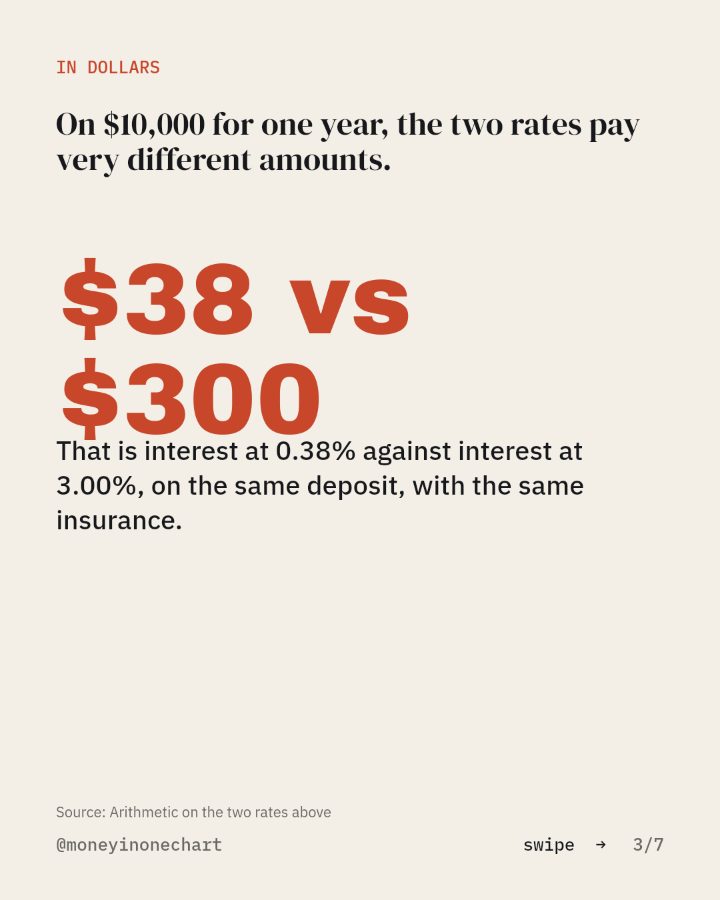
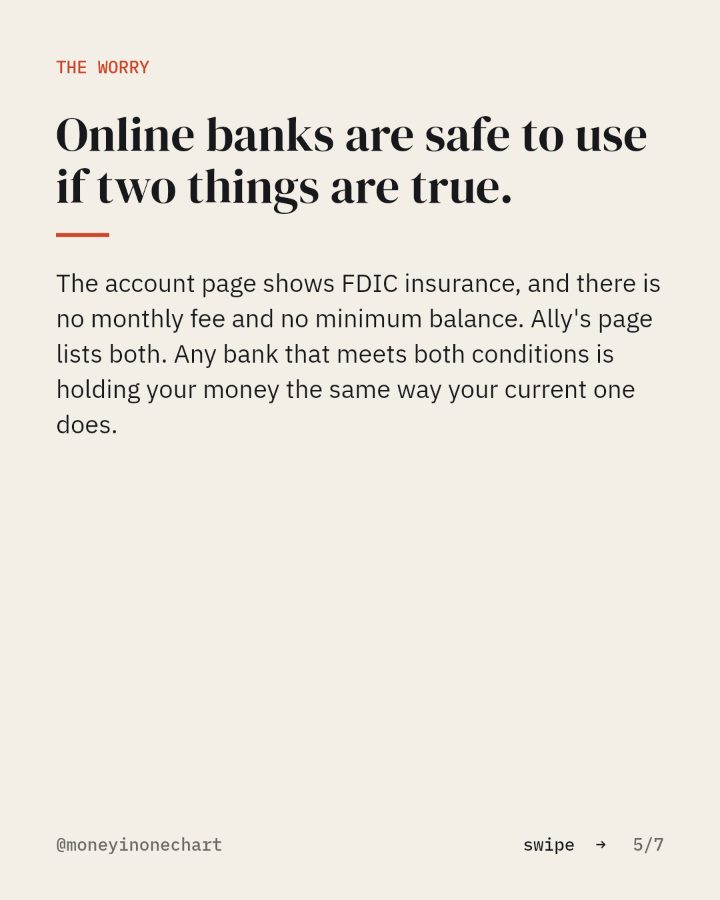
The average US savings account pays 0.38%. An online account next to it pays 3%, with the same federal insurance. On $10,000 that is the difference between $38 and $300 a year.
You asked for the rate comparison. It is below, as the slides from the post, then the one move, then the tool the chart points at.
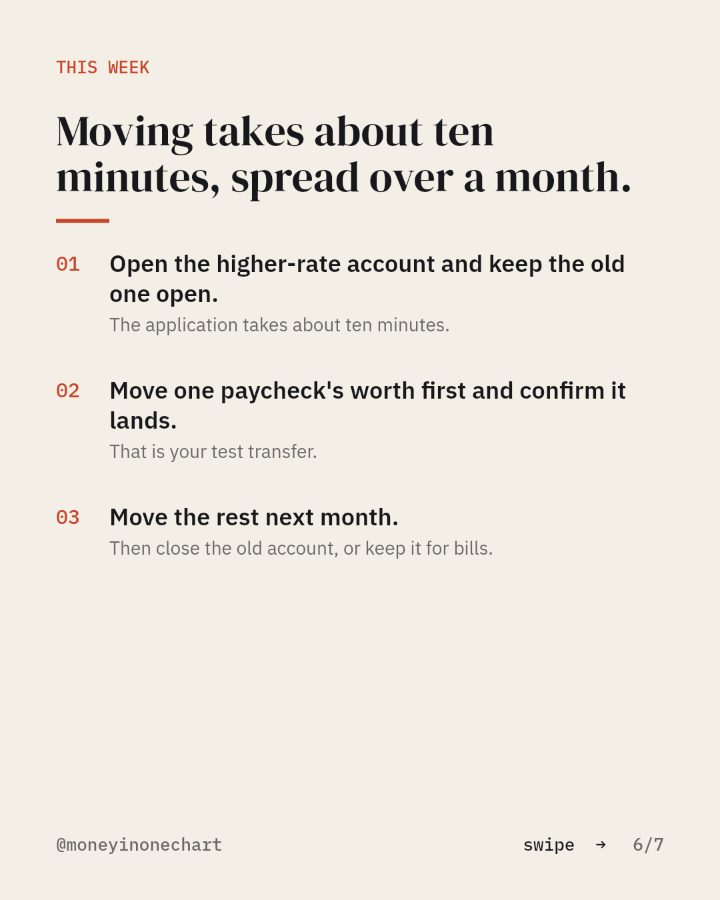
Moving takes about ten minutes, spread over a month.
- 01Open the higher-rate account and keep the old one open.The application takes about ten minutes.
- 02Move one paycheck's worth first and confirm it lands.That is your test transfer.
- 03Move the rest next month.Then close the old account, or keep it for bills.
The tool this chart points at
A low-fee brokerage
For the IRA, the index fund and the rollover. Broad index funds with expense ratios under 0.1%.
Open itThis link may pay Money in One Chart a referral fee if you open an account. Your price does not change. How that works.
Sources: FDIC national rates 2026-08-17; Ally rate page 2026-09-18; Arithmetic on the two rates above.