 Money in One Chart
where money goes
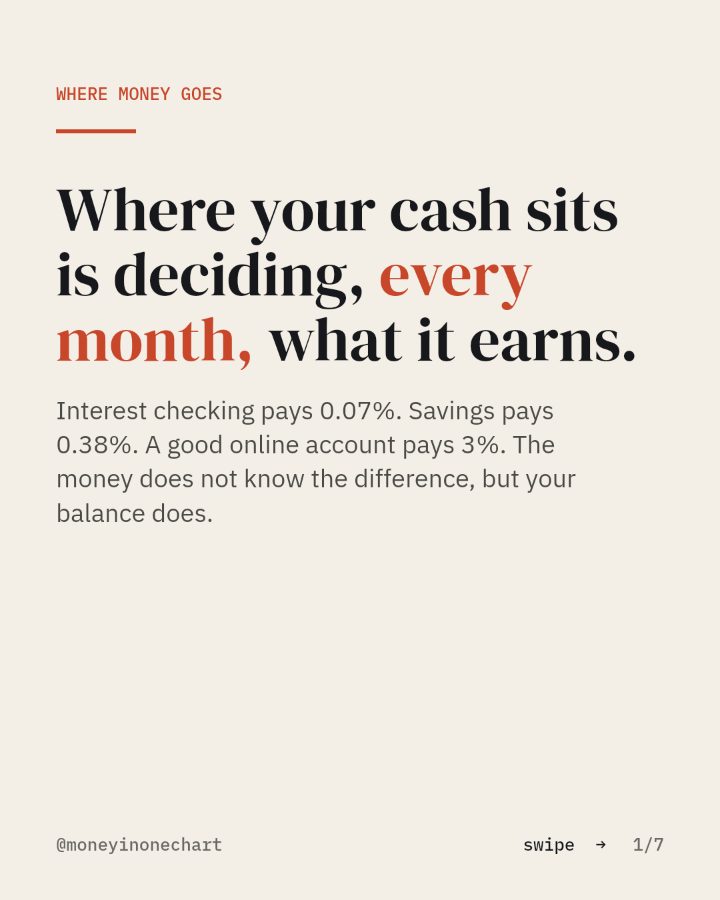
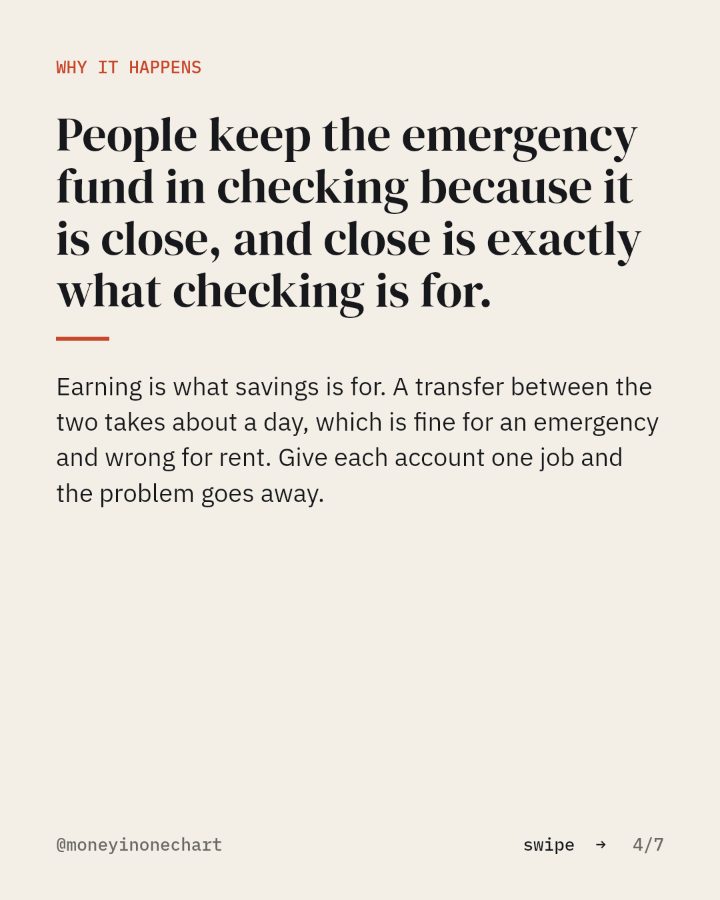
Where your cash sits is deciding, every month, what it earns.
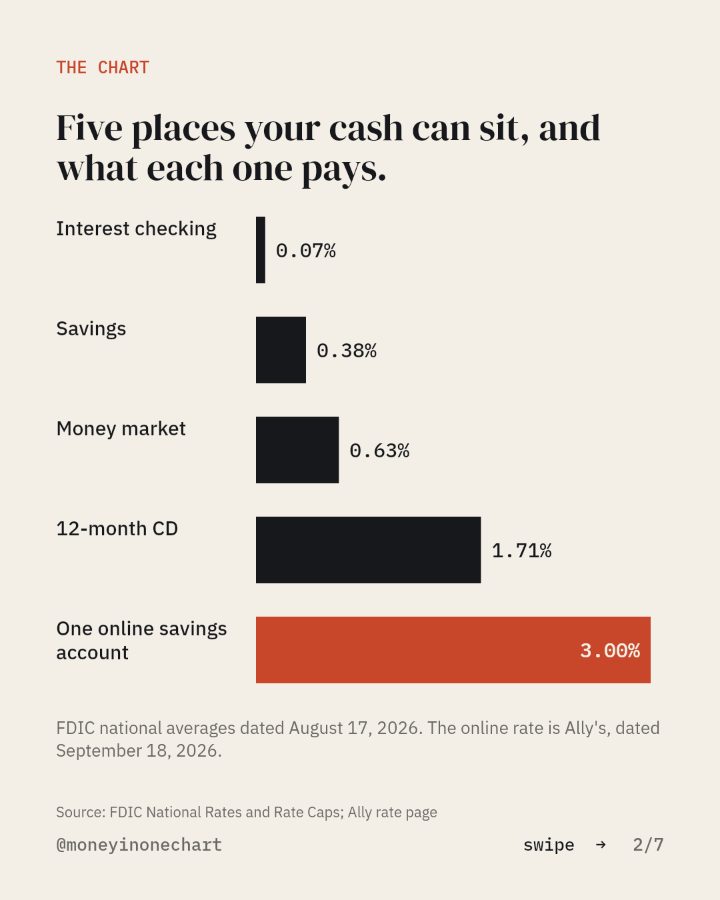
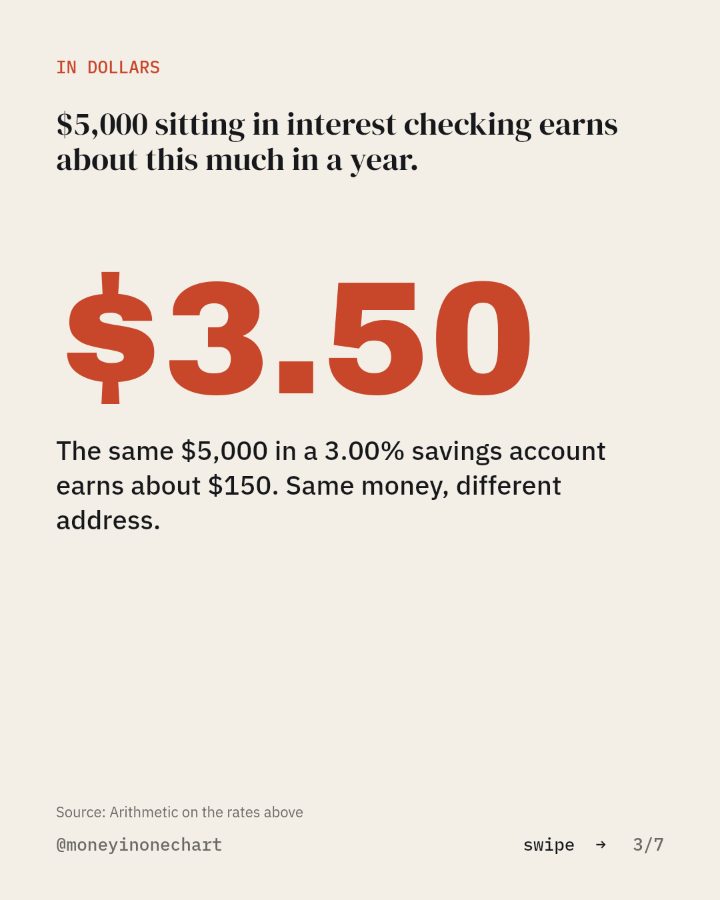
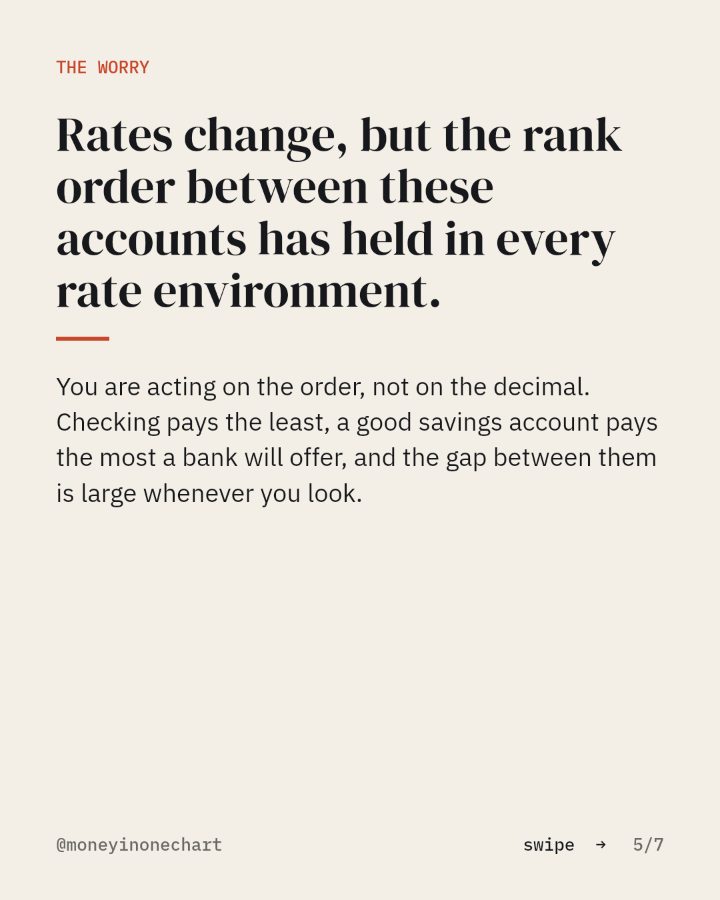
Interest checking pays 0.07%. Savings pays 0.38%. A good online account pays 3%. The money does not know the difference, but your balance does.
You asked for the account map. It is below, as the slides from the post, then the one move, then the tool the chart points at.
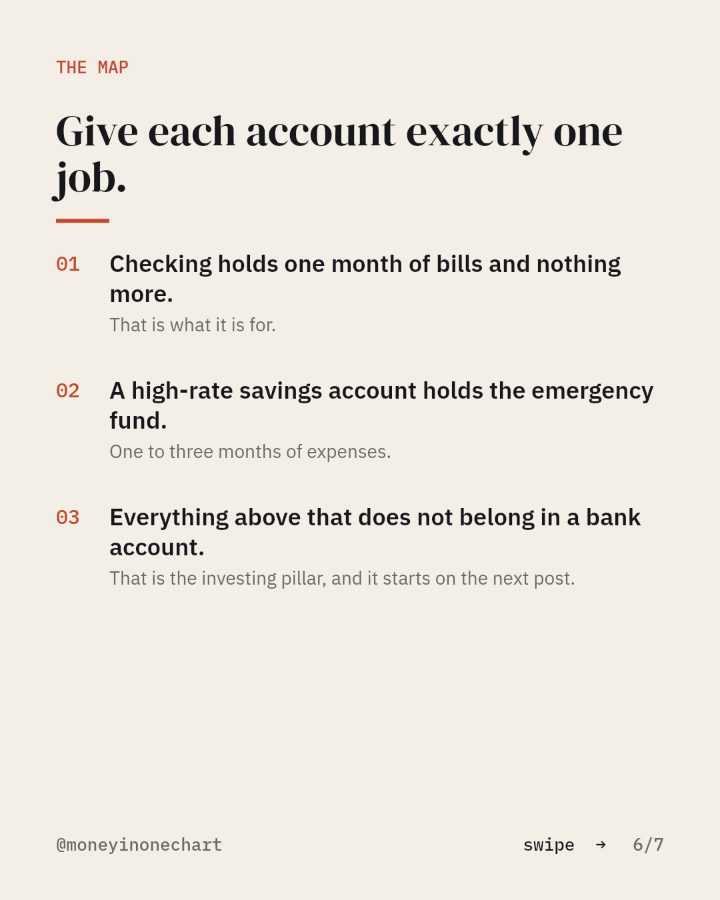
Give each account exactly one job.
- 01Checking holds one month of bills and nothing more.That is what it is for.
- 02A high-rate savings account holds the emergency fund.One to three months of expenses.
- 03Everything above that does not belong in a bank account.That is the investing pillar, and it starts on the next post.
The tool this chart points at
A high-yield savings account
FDIC-insured, no monthly fee, no minimum balance. Where the emergency fund lives.
Open itThis link may pay Money in One Chart a referral fee if you open an account. Your price does not change. How that works.
Sources: FDIC National Rates and Rate Caps; Ally rate page; Arithmetic on the rates above.